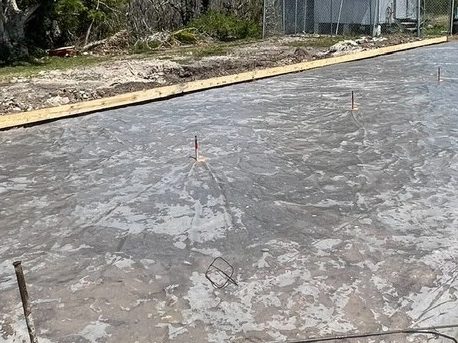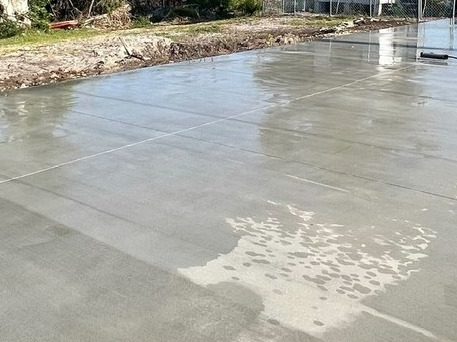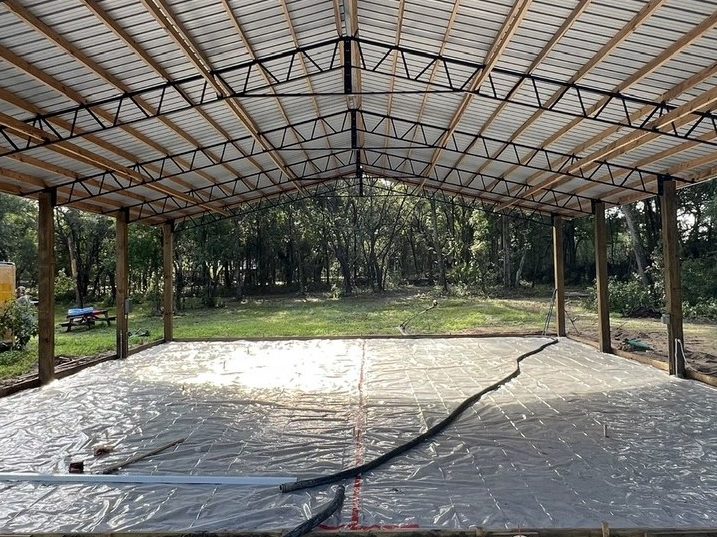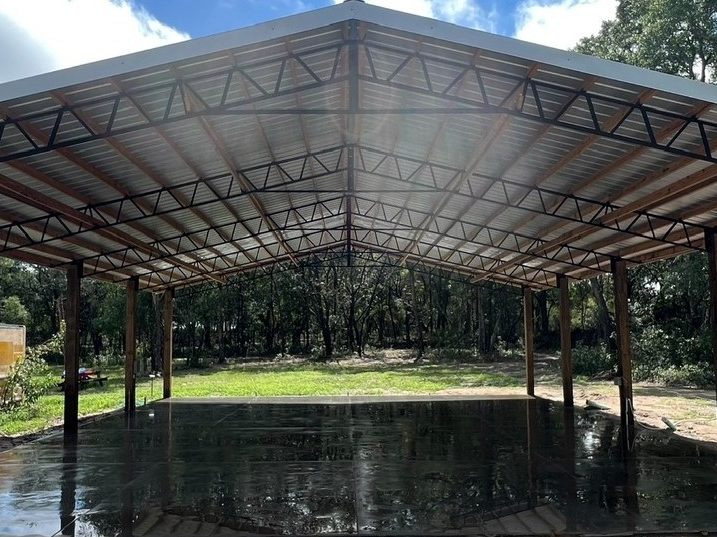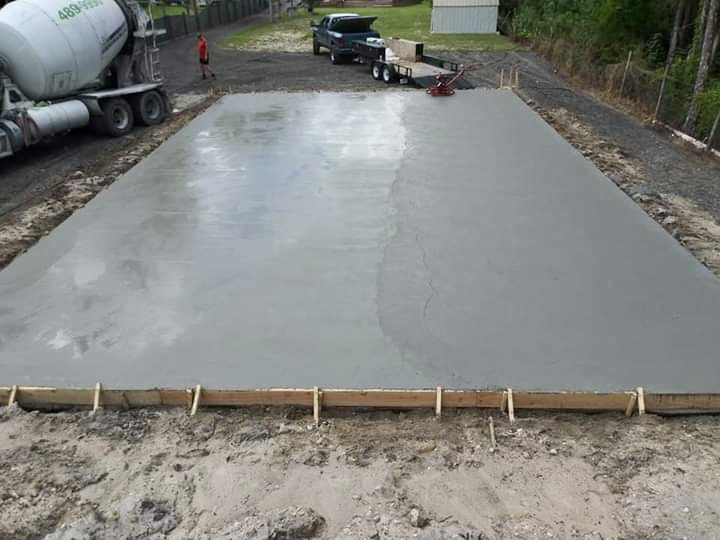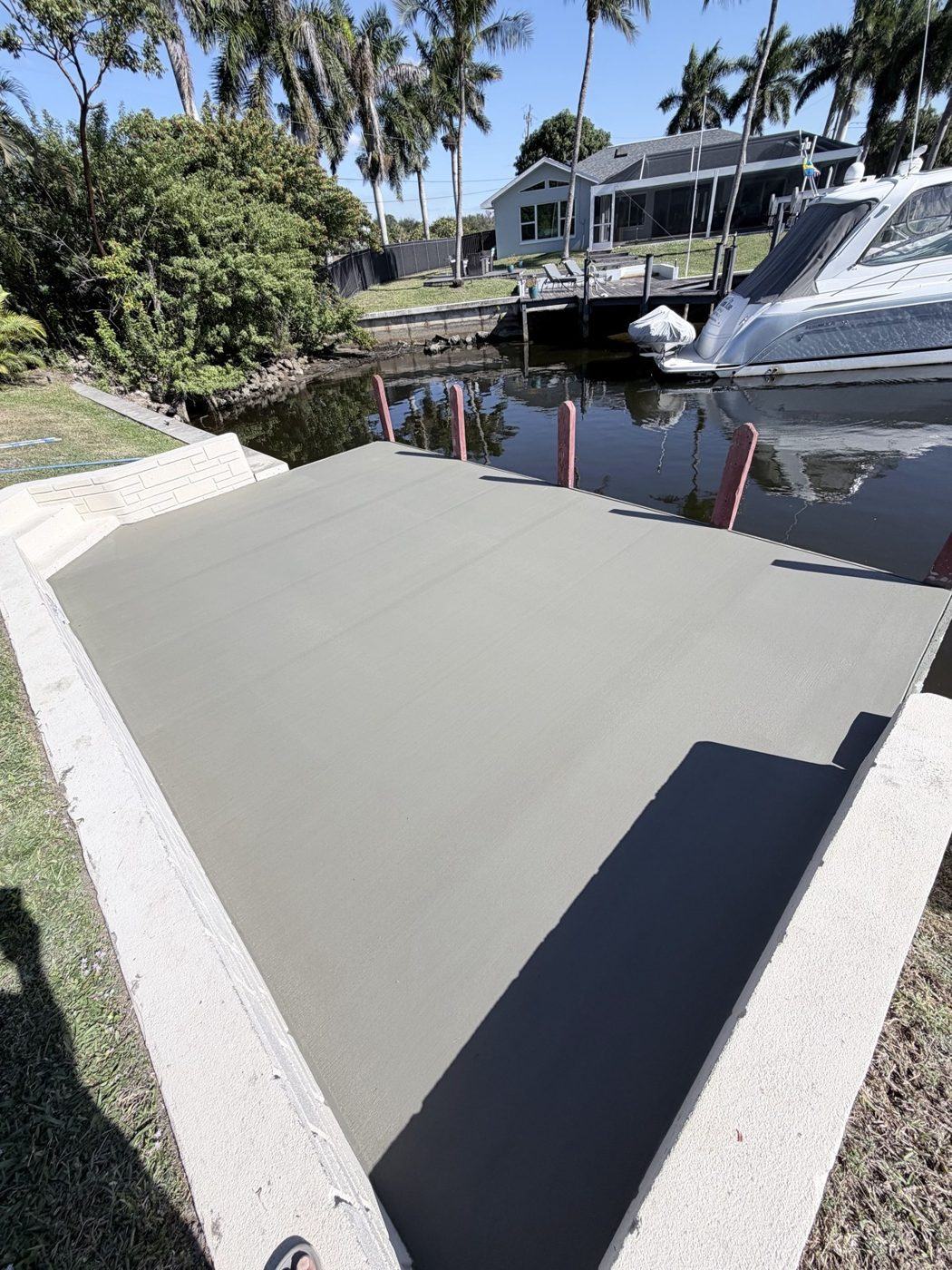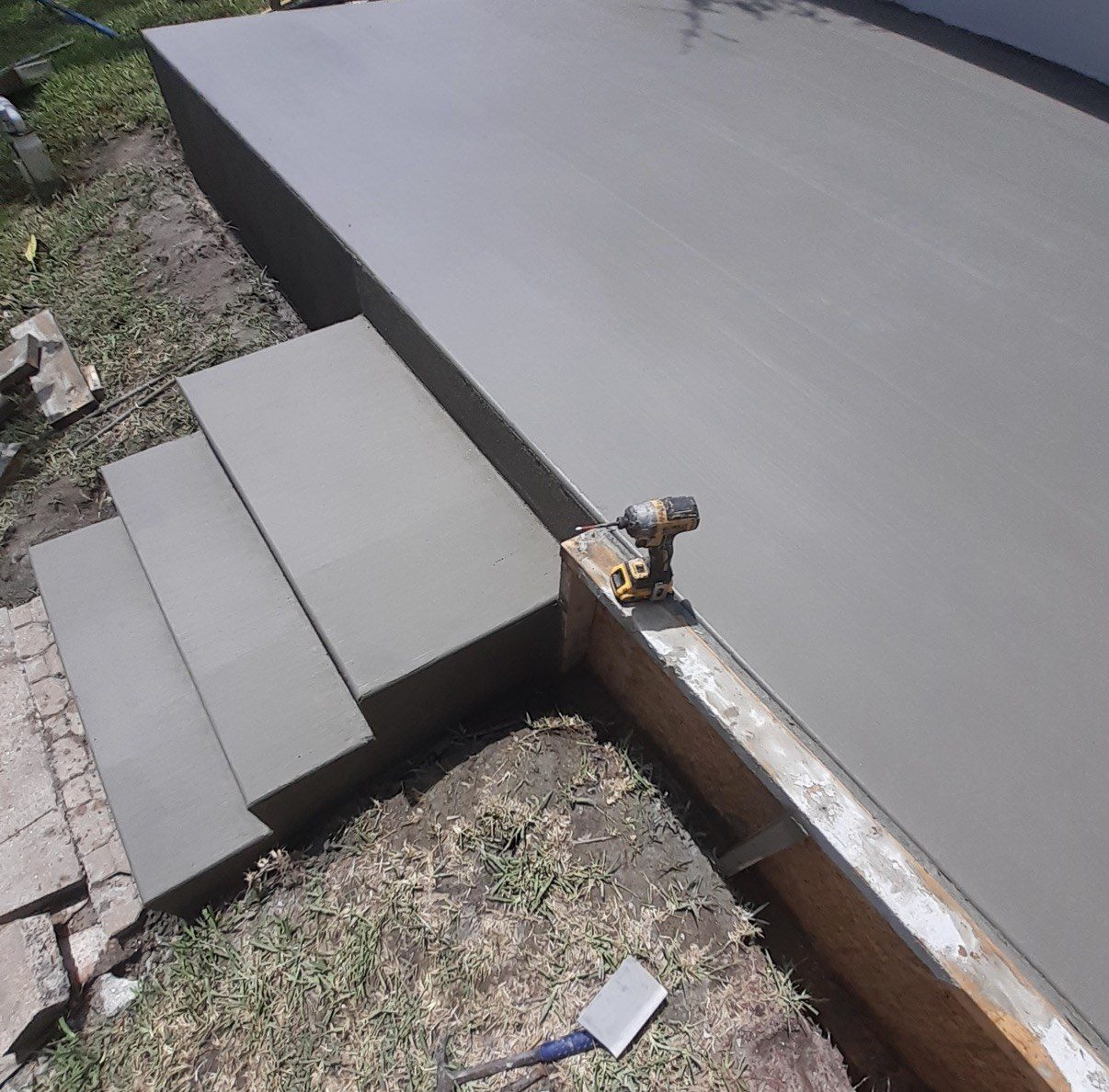
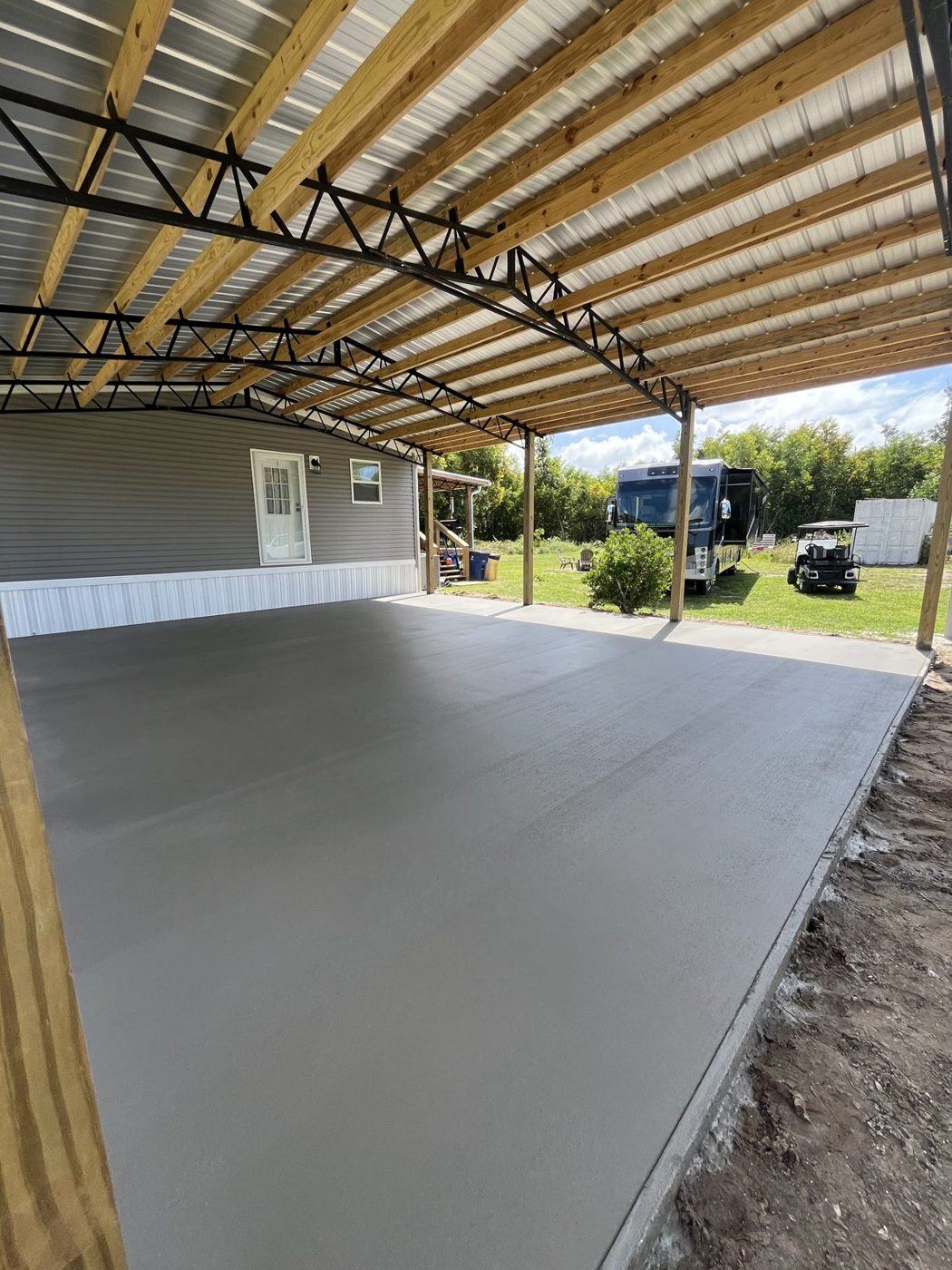
Pads and slabs poured square and level
Shed pads, A/C and generator pads, screen-room slabs, trash-can pads and outdoor living areas. If it needs a flat, solid concrete base, we form it square, pour it to the right thickness and finish it clean.
Tell us what's going on the slab and we'll recommend the thickness and reinforcement that make sense, without upselling what you don't need.
Every standard slab includes
- 4-inch, 3,000 PSI concrete with fiber
- Site prep and forming
- Level or sloped finish, as needed
- Broom finish and control joints
- Full cleanup when we're done
Popular upgrades
- 5- or 6-inch thickness for heavier loads
- Wire mesh reinforcement
- Compacted stone base
- 4,000 PSI concrete
- Stamped finish
What affects the price of a concrete slab or pad
- What's going on it. A trash-can pad and a shed full of equipment need different thickness and reinforcement. The load sets the spec.
- Level or sloped. Sheds and screen rooms usually want a dead-level slab. Outdoor pads usually need a slight pitch to drain.
- Small job minimums. Pads under 200 sq ft still need a truck, forms and a crew. Those are priced individually from photos.
- Location on the lot. A pad beside the driveway is easy to reach. One behind a fence or in the back corner of the yard may need wheelbarrows or a pump.
Slabs and pads in Cape Coral, Fort Myers and Lee County
Generator pads have become a regular request in Cape Coral, Fort Myers and Lehigh Acres since the last few hurricane seasons. A standby generator needs a flat, solid base set clear of standing water, and the installer usually has specific size requirements. Send us the spec sheet or the installer's notes and we'll pour to match. A/C pads and pool equipment pads follow the same idea on a smaller scale.
With the high water table in much of Lee County, a slab that sits too low can end up surrounded by water after a heavy summer rain. We set pad height so it stays above the surrounding grade. Shed slabs on canal lots in Cape Coral and on Pine Island often have setback rules from the seawall, so check your survey. If a permit is required for your pad, we'll let you know up front.
How a slab job runs
- Tell us the use. Let us know what the slab is for, its size and any installer or shed specs.
- Photos or visit. Small pads are priced from photos, and larger slabs get a quick site visit.
- Square the forms. We set forms square and to the right height, level or sloped as needed.
- Pour and finish. The slab is poured to spec, finished, jointed and left clean.
Common questions
What thickness do I need?
Most patios and pads are 4 inches. Heavier uses like a shed full of equipment or a vehicle pad may call for 5 or 6 inches. We'll recommend what fits your use.
Can you pour a slab for a shed or generator?
Yes. Tell us the size of the shed or equipment and we'll size the pad to match.
What about structural or engineered slabs?
We focus on non-structural residential flatwork. If your project needs engineered plans, we'll tell you up front.